- Home
- Attractions
- Page active







Addis Ababa Attractions & History
The Addis Ababa was founded in 1886, when Emperor Menelik II's consort, Queen Taytu, asked her husband for a piece of land on which to build a house at the foothills of the Entoto mountains, where Menelik had his camp. The fertile area was the site of hot springs, to which the queen and many of the courtiers spent much of their time travelling. Menelik agreed
In the same year Queen Taytu gave the settlement its name: Addis Ababa, literally meaning 'New Flower' in Amharic. For several years Menelik and his counties divided their time between Entoto and the new settlement, but by around 1891 Addis Ababa had definitely become the more important of the two, emerging as the unquestioned capital of the realm.
From its inception Addis Ababa was clustered around two main centres: the palace to the east and the market, with Saint George's Church, to the west. Together they generated so much activity that the capital grew and developed rapidly.
On 5 May 1936, Italian troops occupied Addis Ababa during the Second Italo-Abyssinian War, making it the capital of Italian East Africa. Addis Ababa was governed by the Italian Governors of Addis Ababa from 1936 to 1939. After the Italian army in Ethiopia was frustrated by Ethiopian patriots, and defeated with British help during the Liberation of Ethiopia, Emperor Haile Selassie returned to Addis Ababa on 5 May 1941—five years to the very day after he had departed—and immediately began the work of re-establishing his capital.
Emperor Haile Selassie helped form the Organization of African Unity in 1963, and invited the new organization to maintain its headquarters in the city. The OAU was dissolved in 2002 and replaced by the African Union (AU), also headquartered in Addis Ababa. The United Nations Economic Commission for Africa also has its headquarters in Addis Ababa. Addis Ababa was also the site of the Council of the Oriental Orthodox Churches in 1965.Addis Ababa is the headquarters of the United Nations Economic Commission for Africa and the African Union.
Today Addis Ababa, which bears the imprint of many of these past developments, is a major metropolis, with an estimated population approaching five million.Historian Conti-Rossini once characterized Ethiopia as a 'rich cultural mosaic'. He could also have been speaking about Addis Ababa itself. Each of the country's multitude of ethnic groups is represented somewhere in the capital, as are a large number of foreign residents from all parts of the world who contribute to the city's cosmopolitan atmosphere.
There is much to do and see within the capital, whether at night – at the variety of nightclubs offering all manner of music from traditional Ethiopian to modern pop, as well as dancing - or by day. The sports minded will probable already know of the country’s global reputation for producing first-class long distance runners, several of whom are world record holders. But those not anxious to try out their running shoes at this high altitude can still take advantage of the tennis - as well as open-air swimming in warm thermal water - offered by several top hotels. In addition, the Addis Ababa stadium offers frequent inter-African and other international as well as local football matches; and there are plenty of opportunities for horse-riding, bowls, and other sports.
The national language, Amharic – Africa’s only written language with its own uniquie script – is widely spoken throughout the country and is predominant in Addis Ababa. The principal foreign language are English, French, Italian, and Arabic.
Landmarks & Monuments in Addis Ababa
The traditions of erecting monuments has an age-old history in Ethiopia. In this regard, the Axumite and Tiya monuments are worth mentioning. It is obvious that monuments has been erected in Ethiopia to commemorate very important personalities or events. In Addis Ababa, more than 17 monuments stand at different parts of the capital.
Africa Hall
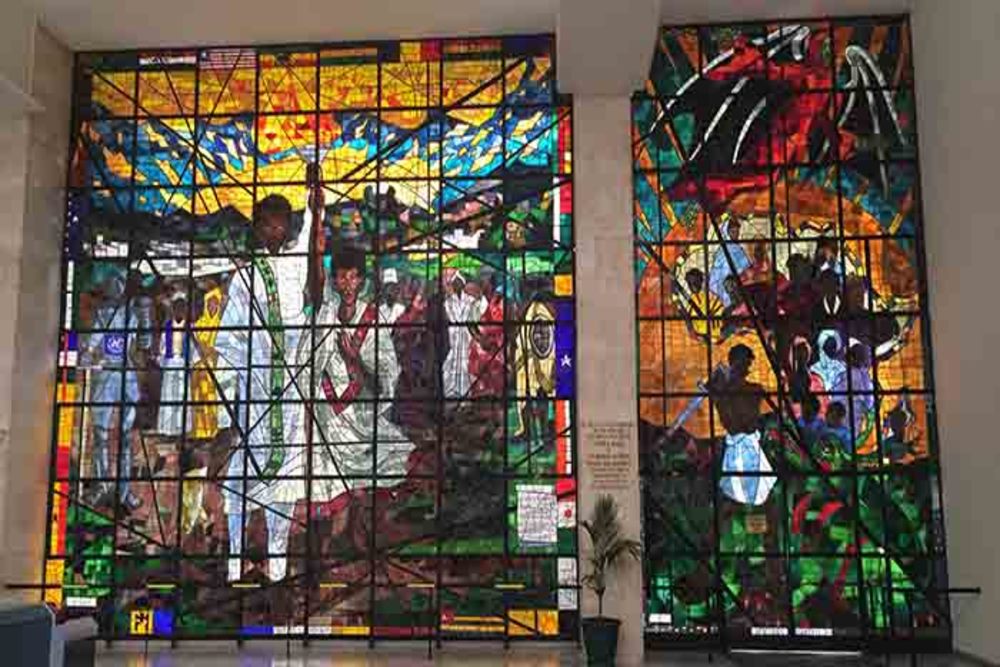
Situated opposite the Imperial Palace and imposing a symbol of African independence and optimism, Africa Hall is the headquarters of the Economic Commission of Africa. Built in 1963, Africa Hall is famous for the huge stained glass mural created by Afework Tekle symbolizing African unity. Another iconic artwork within the hall is a majestic mural of African leaders with the flags of their countries. During the 20th Century the hall has hosted a multitude of international conferences and is still a busy center of African political activity. The expansive compound that houses Africa Hall is also home to 17 other UN organizations, as well as the UN Conference Centre, considered one of the best in Africa.
The Filwoha springs are just to the west of the Africa Hall. These springs, which have obviously lost some of their former beauty, prompted Queen Taytu to persuade her husband to establish his new capital at Addis Ababa. The thermal waters are now diverted to an adjacent bathing complex.
Also next to the Africa Hall lies the huge Square a natural amphitheater where parades are held every September to mark the 1974 revolution. Portraits of Marx, Angels, Lenin and Comrade Mengistur used to adorn the square.
St George's Cathedral
St George's Cathedral (Giorgis Cathedral). Lies at the north end of Churchill Rd. Built in 1896 in the traditional octagonal shape to commemorate Ethiopia's victory over the Italians at the Battle of Adwa, the Cathedral houses the work of Afewerk Tekle, the renowned Ethiopian artist responsible for the stained glass windows of the Africa Hall. Cathedral opens 0800-0900 and 1200-1400. There is also a small museum in the compound.
The Menelik Mausoleum
The Menelik Mausoleum, built in 1941 to serve as the tombs of emperors and princes, The Mausoleum of Menelik II, which holds his wife and daughters, as well as other notable figures from the country's past .Today, the mausoleum serves as a church, but you can visit the crypt to see the white marble tombs, paintings, and other artifacts evoking the life of the late ruler.
Haile Selassie's Grand palace
Haile Selassie's Grand palace is located north east of Churchill Ave at the end of Colsen St. The Emperor has a second residence, Jubilee Palace, on Menelik Ave, just north of the Ghion Hotel.
National Museum of Ethiopia
The National Museum of Ethiopia in Addis Ababa offers a comprehensive overview of the country's natural, political and art histories. Visitors can easily spend a full morning or afternoon here soaking in the "edu-tainment." A cast of the bones of the Australopithecus afarensis Lucy are here of course, but so is the throne of Emperor Haile Selassie, traditional tools and textiles, and displays about Ethiopia's different tribes.
Menelik IISquare
In Menelik II Square stands the imposing equestrian statue of Emperor Menelik II, the victor of Adawa. The statue was erected by Emperor Haile Selassie and dedicated on the day before his coronation in 1930, in memory of his great predecessor. The square is located outside the main gates of St. George Cathedral (Genete Tsige Menagesha Kidus Giorgis), and is close to City Hall. The distance markers on all the highways in Ethiopia mark the distance to their location from the base of the statue of Emperor Menelik II in this Square. Every year, on the anniversary of the victory of the Battle of Adawa, the Emperor would lay a wreath at this statue after attending mass at St. George Cathedral (the victory had occurred on St. George's Day). Col. Mengistu continued laying a wreath here on the anniversary, but did not attend the church services as his regime was Marxist.
Yekatit 12 Martyrs Square (Sidist Kilo)
The Yekatit 12 Square is a monument commemorating victims of Italian reprisals following an attempt to kill the Italian Viceroy Rodolfo Graziani 19 February 1937, or Yekatit 12 in the Ethiopian calendar. Every year, people of Addis Ababa celebrate this day. The monument represents a white obelisk where the scenes of massacre and the funerals of the victims are depicted. This monument is also called the Monument of Martyrs or Sidist Kilo ("Six Kilometer"), that is, the name of the quarter where the monument is located
The monument is in the form of a white obelisk with black bas reliefs of scenes of the massacre as well as scenes of the Imperial funeral accorded to the remains of the victims in the presence of the Emperor following the liberation around it. A Lion of Judah also decorates the face of the obelisk. Even though the image of the Lion of Judah and the Emperor Haile Selassie were removed from all over the city during the reign of the Dergue, they suprisingly did not touch this monument.
Meyazia 27 Square (Arat Kilo)
Meyazia 27 Square or Arat Kilo is a square in, which its center is the epoch making monument, commemorating Ethiopia's liberation from Fascist Italy.Much of interest maybe the fact that in the Ethiopian calendar 'Meyazia 27' (May 5), is both the day when Addis Ababa fell to Italy and the day when Emperor Haile Selassie triumphantly returned to the city after its liberation. Also remarkable is that the original monument included a relief of the Emperor Haile Selassie holding the flag of Ethiopia, which was altered during the rule of the Derg into an image of a guerrilla fighter holding the flag.
Due to its proximity to the Menelik Palace, residence of the Prime Minister of Ethiopia, and the Ethiopian Parliament Building, Arat Kilo is often used as a metonym for the Ethiopian government.
The Lion of Judah Monument
The Lion of Judah Monument stands in the square in front of Addis Ababa's train station. The golden colored statue of the Lion of Judah in it's complete glory stands on a black granite pedestal which is decorated with relief portraits of Emperors Menelik II and Haile Selassie I, and Empress Zewditu, as well as Ras Makonnen.
The Lion of Judah statue has a very interesting history. Erected in 1930 just before Emperor Haile Selassie's coronation, it was looted by the Italian occupiers in 1935 and taken to Rome, where it was erected next to the Vittorio Emanuelle Monument. During the 4th anniversary celebrations of the proclamation of the Italian Empire, Adolf Hitler chose to visit Rome, and attended the celebratory parades along side the Fascist Dictator Musollini and King Victor Emanuelle III. In the parade were numerous subjects of Italy's African Empire, including a young Eritrean named Zerai Deres. Zerai Deres was marching with other parade members carrying a ceremonial sword with which to salute the King, the Fuhrer, and el Duce, at the grandstand. As the parade marched past the Vittorio Emauelle monument, Zerai looked up and saw to his shock, the golden Lion of Judah, the symbol of the ancient monarchy to which his ancestors had long owed allegiance, erected as war booty in the heart of Rome. It was too much for him to bear, and he promptly drew his sword and with tears of anger running down his face he fell on the first Italian officer he could find. He killed and wounded numerous Italian military officers before he was killed. Zerai Deres is lionized to this day as a brave Ethiopian patriot. The monument remained in Rome for several decades, and was finally returned to Addis Ababa after long negotiations in the 1960's. When it was re-erected in it's square the day it arrived, the Emperor was present in military uniform to salute, and to pay tribute to Zerai Deres.
Following the revolution in 1974, the Dergue regime decided to remove the statue once more as it was a monarchist symbol. However, the elderly war veterans association members appealed to the Dergue to consider the memory of Zerai Deres and his sacrifice that was inspired by this very symbol. This act saved the statue and it stood it all it's Imperial glory right through the Dergue era, and continues to stand today.
Abune Petros Memorial
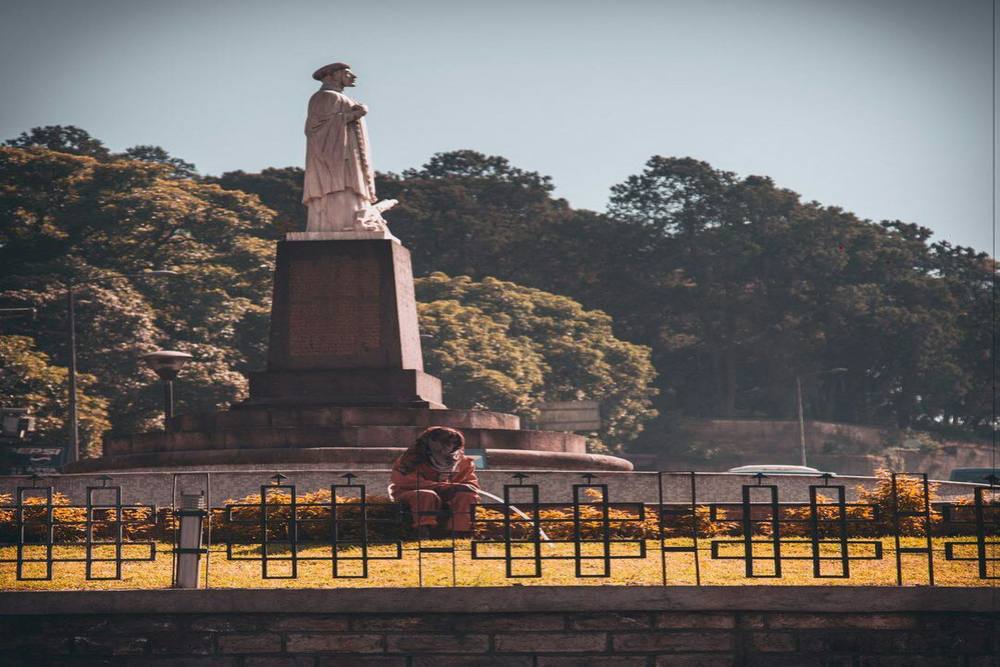
Just West of Addis Ababa's impressive City Hall, down the hill on the main road to the Merkato district is Abune Petros Square with it's imposing statue. Abune Petros, the Ethiopian Orthodox Bishop of Wello who was executed by the Italians at the edge of this very square. Abune Petros was one of the four first native Ethiopians who were anointed as bishops by the Coptic Patriarch of Alexandria to serve under the Coptic born Archbishop Abune Kerllos of Ethiopia in 1932. Abune Petros was given the province of Wello as his diocese.
In 1936, the Fascist armies of Benito Mussolini occupied much of Ethiopia, and Abune Petros traveled to the northern Shewan district of Menz to join the sons of Ras Kassa, Dejazmatches Wondwossen, Abera and Asfa Wossen Kassa and other resistance leaders to plan an attack on the Italians to drive them out of Addis Ababa. The attack failed in 1937, and the Bishop was captured. Defiantly refusing to submit to Italian rule, he was condemned to death. Shortly before his execution Abune Petros Bishop of Wello, dressed in his clerical robes, held up his hand cross and pronounced his anathema on the people and on the very earth of Ethiopia itself, if they were ever to submit to the invader. He was then shot to death in front of a horrified audience. Emperor Haile Selassie had the statue erected in the memory of this great Bishop upon his restoration to the throne. The spot of his execution on the western edge of this square is also marked by a memorial slab. Sadly, during the brutal rule of the Dergue regime, the bodies of many victims of the "Red Terror" were displayed in this square..
Merkato Open Market
The Mercato is located in western Addis Ababa and is one of the largest markets in Africa offering an array of colors, aromas, costumes, produce and jewellery. Beware of pickpockets. In Mercato virtually every possible commodity is on sale, from livestock to computers.
ANWAR Mosque one of the attraction of the largest market in Africa.the mosque came into being in the late 1930s, when the Italian administration decided to develop the established market at Arada .
Unity Park / Andinet Park (Menelik II Palace)
Menelik II Palace a.k.a. the Grand Palace,is open for visitors beginning October 10, 2019 .
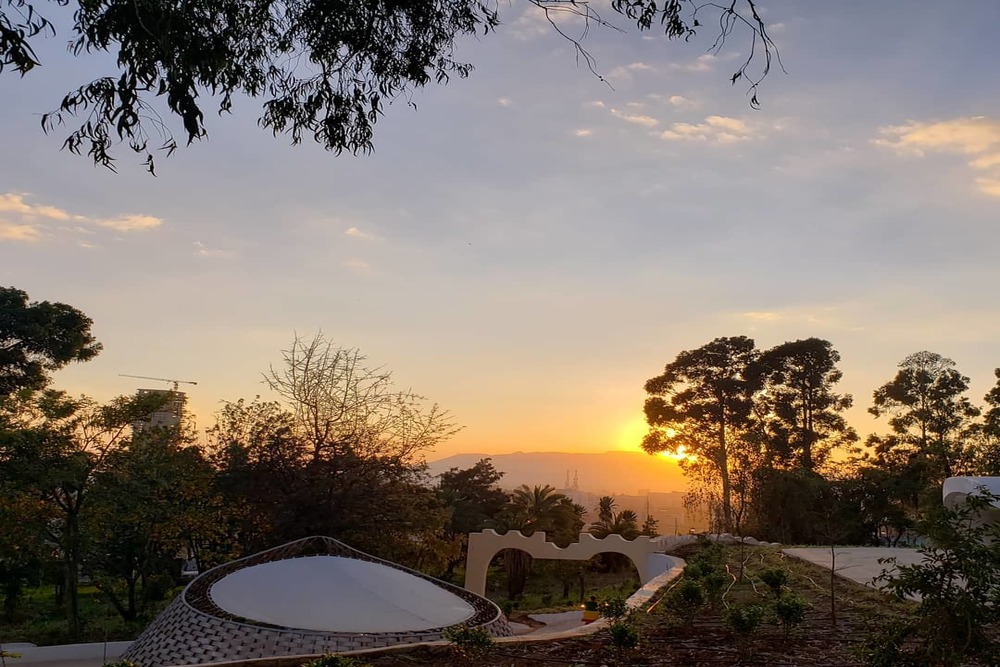
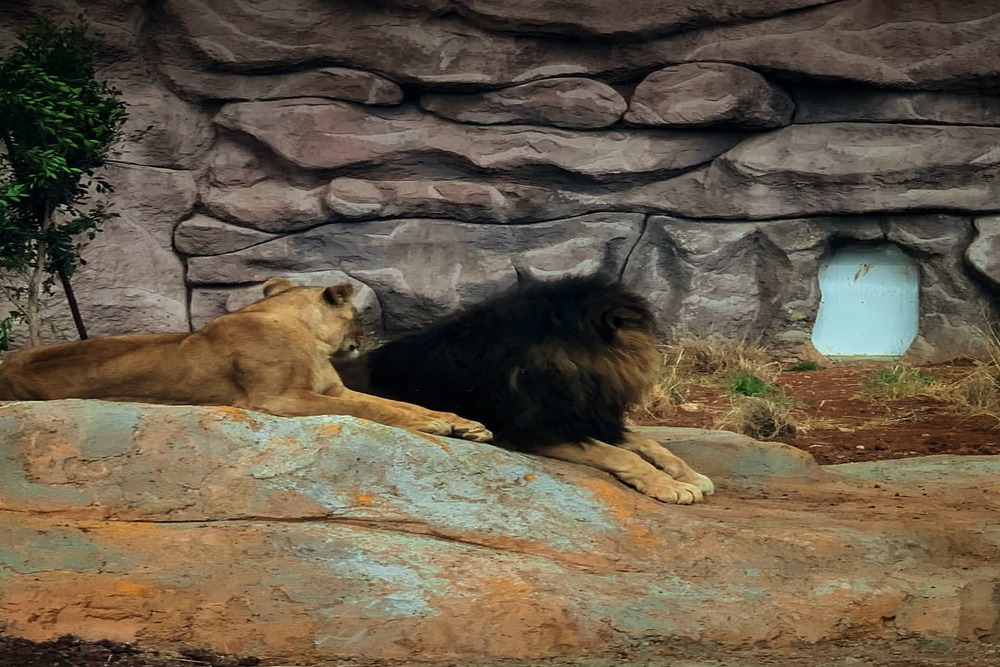
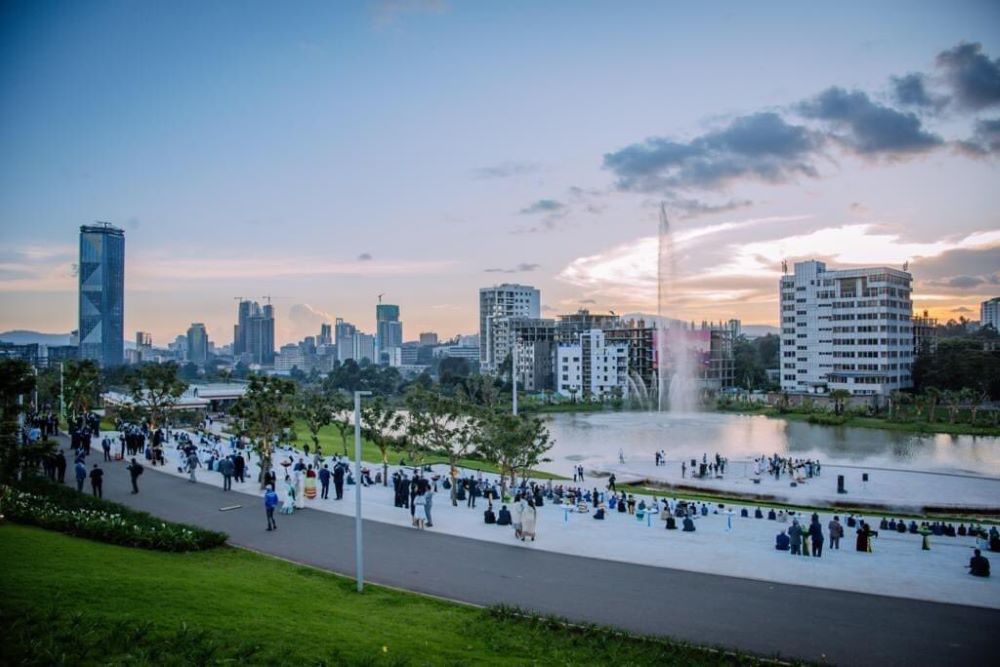
Built over a century ago, the Palace rests on 40,000Sqm of land. For generations, it has been viewed as the epicentre of political power, where the most powerful family in the land resides. The renovated compound incorporates several sights of interest to visitors, including an arena, a playground, a zoo and an imperial banquet hall.
Sheger Park
Find the park's address, phone number, website, directions, hours, and description here
Entoto Natural Park
Entoto Park is fully equipped with various indoor and outdoor facilities including sport centers, library, Entertainment, Restaurants and coffee shops, Artificial Lake and Fountains Walk ways, Bike, scooter and cart roots. Most of These facilities were constructed using local material so they blend in beautifully with the natural environment of the park.
Some interesting activities in Entoto Natural Park include :-A Paintball arena which is a safe heaven for everyone who enjoys a good game of paintball. A Horse riding ranch for both adults and children’s .Adults can follow a 3-5 kM trekking route on a horse back while children have their own horse riding arena with a trainer. Outdoor archery and In addition Entoto Park will include A Large Outdoor Amphitheatre that will be used for concerts theaters and live music.
Related Tours

1 Day Addis Ababa City Tour
This is about 8 hours sightseeing tour of Addis Ababa
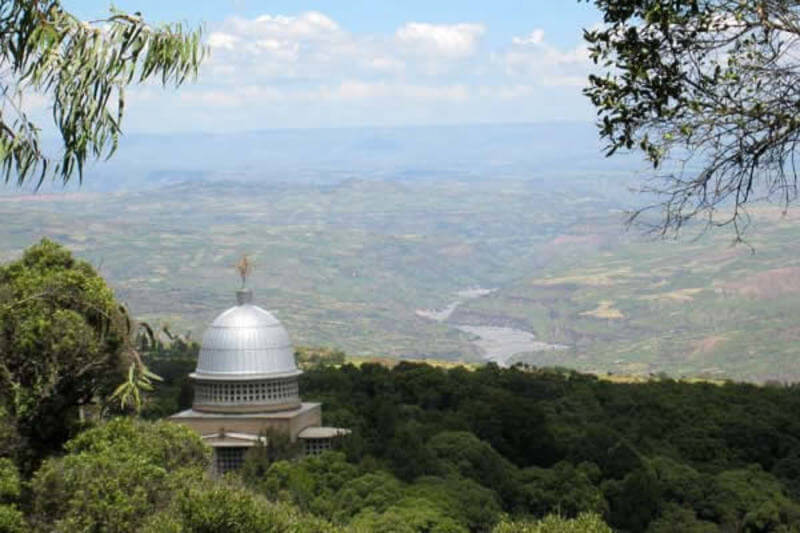
Debre Libanos Monastery & The Portuguese Bridge Day Tour
This great one day trip will depart Addis Ababa at 8.00 am and have you back in the capital by 4.30 pm.

Debre Berhan & Ankober palace 1 Day Tour
Visit to palce of Menelik situated on a hill commanding a panoramic view of the region