- Home
- Ethiopia Timket (Epiphany)
- Page active


Ethiopian Timket (Epiphany) Registered by UNESCO as Cultural Heritage
The United Nations Educational, Scientific and Cultural Organization (UNESCO) decided to inscribe TIMKET, which is Ethiopian Epiphany, on the List of Representatives of the Intangible Cultural Heritage of Humanity.
According to UNESCO, inscription of Timiket festivity on the Representative List could enhance the visibility of intangible cultural heritage and promote inter-cultural dialogue among the multi-ethnic population of Ethiopia and other communities globally.
Timket is a Ge’ez word meaning “immersion in water” similar to the Baptism of Jesus Christ. The word also denotes epiphany which is driven from the Greek word epiphaneia meaning “appearance”. The annual Timket celebration is held across Ethiopia on Tir 11 E.C (January 19 G.C) with processions of priests carrying replicas of the Ark of Covenant, locally known as ‘Tabot’, escorted by thousands of believers. The day is observed in commemoration of Christ’s baptism in the Jordan River.The festive lasts two days, the 18th (the eve of Timket) and the 19th 0f January, even extending to a third day where there is Tabots dedicated to Archangel Michael whereby celebrated the feast of the miracle of Jesus at the wedding of Cana. Read More about Timket
The Origin of Timket Festival in Ethiopia
Ethiopia has been following the teachings of the apostles and started celebrating epiphany at the national level in 530 AD during the reign of Emperor Gebre Meskel. In 1140 AD, king and priest Lalibela made an amendment to the existing tradition of the Epiphany celebration by which he made a decree that urged all Arks of covenant (Tabots) to be carried to a river or pool together to bless the waters.
In 1426 AD, following a proposal from scholars, Emperor Zer’a Ya’ekob declared that the Tabots be taken to nearby pools on the eve (January 18) and stay the night there blessing the nation. In 1486 AD, Emperor Naod also made an order that the Tabots be escorted by the faithful in colorful processions.
In Gondar , the bathing palace of Fasiledas is still dedicated to this colorful ceremony. It is still filled with water each year by a canal from the River Keha for the colorful Timket celebration. Besides the baptism of Jesus Christ, the celebration of Timket in Gondar also commemorates the re-baptizing of thousands of people who have converted from Catholicism to the Orthodox faith. Even though Gondar can be visited at anytime of the year, the city is a wonderful place of visit during this season as it gives one a chance to witness the colorful ceremonies of the timket Festival.In addition to the fasting and feasting , the jubilant processions and the baptismal ceremony, coming as it does in the wedding season, Timket is also known as an occasion for romance and betrothal. It is said that in the countryside a young man would throw a lemon to girl he choose to be his fiancee at Timket and by accepting his gift she would signal his interest in him.
The inscription of Timiket raised the number of Ethiopia’s world intangible cultural heritages to four after Meskel, the Geda System and Fichee-chambalaalla, New Year festival of the Sidama people.
Related Tours
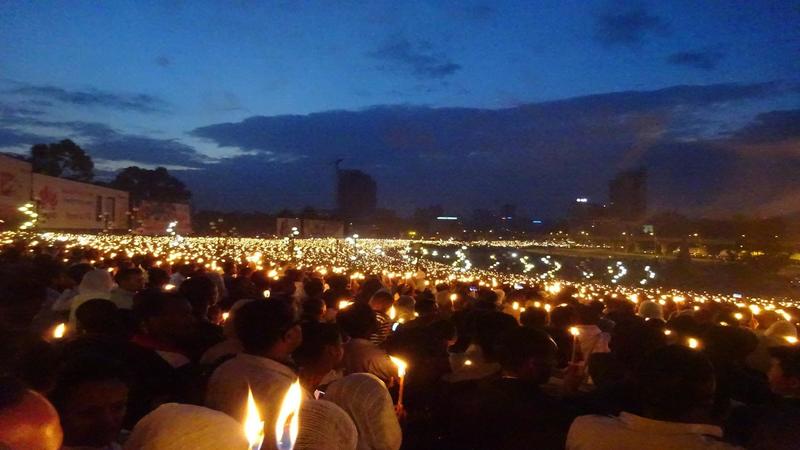
Meskel (Finding of the True Cross) event
Meskel (Finding of the True Cross), one of the major Ethiopian Orthodox festivals is celebrated for two days .

9 Days Ethiopian Timket Festival Tour
Ethiopian Timket Festival Tour — 9 Days. On this tour, you will see one of the most ancient festivals celebrated in Ethiopia

Festival of Timket 3 Days
Timket (Ethiopian Epiphany), which falls on the 19th of January is the day when Christians celebrate the baptism of Christ. It's a three-day festival