- Home
- Attractions
- Page active

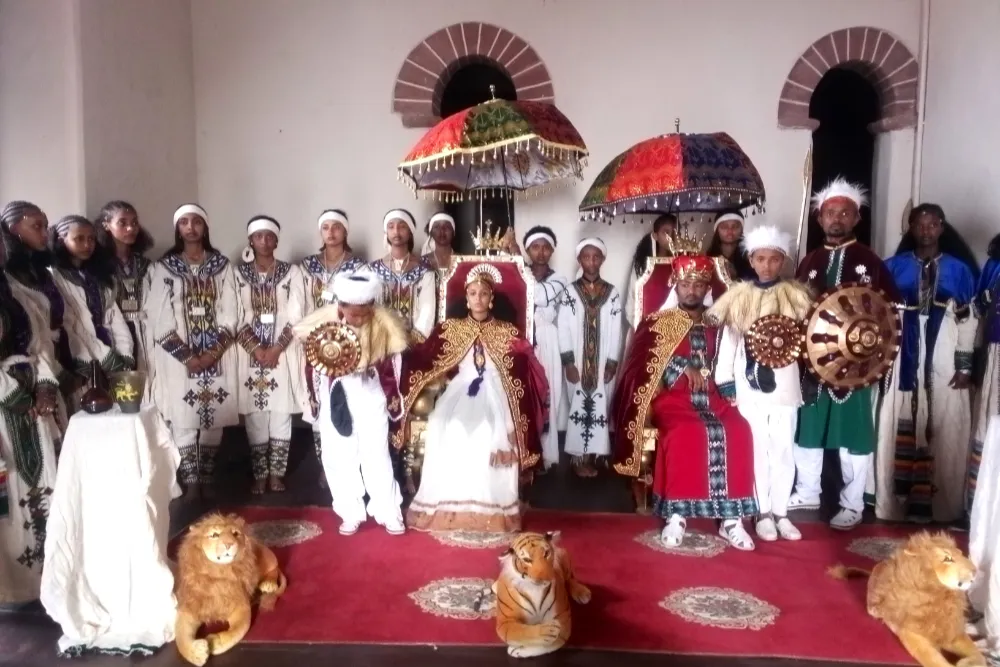

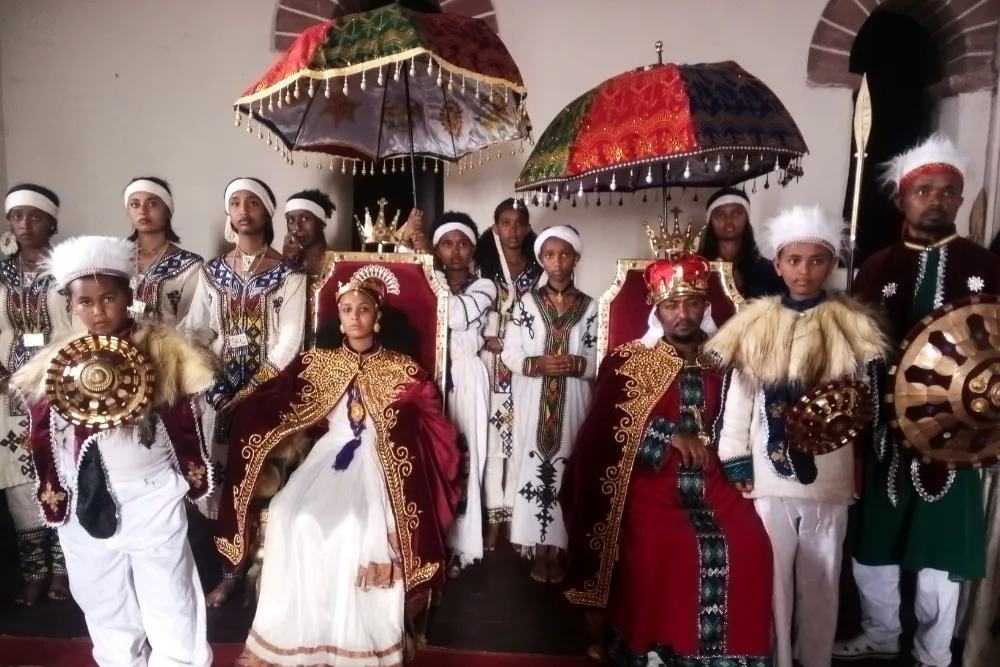
Gondar and Emperor Fasilides: The Rise of Ethiopia's Imperial Capital
Gondar, Ethiopia—Rising from the Ethiopian highlands, Gondar stands as one of Africa's most remarkable historic capitals. Founded by Emperor Fasilides in 1636, the city became the permanent seat of the Ethiopian Empire and the birthplace of the celebrated Gondarine Period. At its heart lies Fasil Ghebbi, the UNESCO World Heritage-listed royal enclosure, whose magnificent castles and churches reflect the political vision, architectural achievement, and religious revival that defined Fasilides' reign.
This article, the first in a series exploring the emperors of the Gondarine Period, examines the life and legacy of Emperor Fasilides, the founding of Gondar, and the construction of the royal palace that transformed the city into the center of Ethiopian imperial power for nearly two centuries.
The Shifting Capitals: A Precursor to Gondar
Governing a monarchical state with mountainous terrain presented significant challenges for Ethiopian emperors. The rugged topography made it difficult to exercise administrative control over localized communities. To overcome these geographic barriers and project imperial authority across distant provinces, emperors historically relied on a mobile court system, continuously shifting the royal seat of power throughout the realm.
During periods of political stability and the rainy season, which was unfavorable for military campaigns, monarchs would establish seasonal capitals. From the late 13th to the 15th century, these centers were often in the Tegulet district of Shewa, with Emperor Zara Yaqob's residence in Debre Berhan being a notable example. By the 17th century, primary royal courts were predominantly situated around Lake Tana, particularly in Dembiya, with rulers like Yaqob, Za Dengel, and Susenyos establishing their seats in or around Denqez .
Emperor Fasilides: A Visionary Ruler and Founder of Gondar
Emperor Fasilides (also known as Fasil, Basilide, or Basilides), son of Emperor Susenyos and Empress Wolde Seala, was born in 1603 at Qoma Fasilides near Debre Tabor, though some sources suggest Shewa as his birthplace. He received his name from Saint Fasilides and was educated in various monasteries and traditional schools, gaining instruction in state governance, the judicial system, and public administration.
Ascending to the throne in 1632 with the throne name Alam Sagad ("He to Whom the World Bows"), Fasilides reigned for 35 years until his death in 1667 . His rule marked a pivotal moment in Ethiopian history, characterized by significant political, religious, and architectural achievements
Ending Foreign Influence and Restoring Orthodox Faith
One of Fasilides' most decisive actions, taken in his first year of reign, was the complete expulsion of Roman Catholic missionaries, including Alfonso Mendes, who had instigated devastating religious civil wars during the previous reign. He severed all relations with Europeans, barring them from entering the country, and formally decreed that the Ethiopian Orthodox Tewahedo faith should be preserved in its ancient, original form. This policy of isolation from Europe lasted for more than two centuries, allowing Ethiopia to preserve its unique cultural and religious identity.
The strategic transition from the hilltop capital of Denqez to Gondar in 1636 was a monumental geopolitical shift, deeply intertwined with the expulsion of the Jesuits and the triumphant restoration of the Ethiopian Orthodox Tewahedo faith. For Emperor Fasilides, abandoning Denqez was not merely a logistical necessity but a profound symbolic break from his father’s Catholic experiment. The political reality of this relocation was solidified by the impending arrival of Abuna Marqos, the first Orthodox Metropolitan appointed after the restoration.
Beyond these immediate religious and political impetuses, the permanent shift to Gondar was reinforced by crucial long-term defensive, economic, and environmental factors. Nestled within a ring of mountains, Gondar provided a highly defensible natural fortress that offered strategic isolation from external invasions, helping secure the throne during a period of shifting provincial frontiers. Furthermore, the new capital sat at a vital confluence of long-distance trade routes, positionally capturing the commercial traffic flowing between the resource-wealthy southwestern provinces, Massawa on the Red Sea coast, and Metemma on the western Sudanese border. Finally, the local health and environment played a decisive role; by choosing an elevated mountain plateau sitting at roughly 2,130 meters above sea level, Fasilides secured a crisp, malaria-free climate capable of sustaining a dense urban population year-round, far away from the swampy, disease-prone lowlands near Lake Tana.
Establishing a Permanent Capital and Diplomatic Prowess
By establishing Gondar as a permanent capital, Fasilides broke from the long-standing migratory tradition of Ethiopian monarchs. This decision transformed Gondar into a true imperial city, fostering stability and enabling the flourishing of arts, crafts, and architecture. His successors continued this tradition, building their own palaces within the city and solidifying Gondar's status as the heart of the empire, ushering in the historically renowned Gondarine Periody.
Beyond internal reforms, Fasilides engaged in proactive diplomacy, establishing friendly diplomatic ties with Islamic kingdoms such as the Safavids, Ottomans, the Imams of Yemen and Mughals. This proactive diplomacy was instrumental in revitalizing regional trade networks and served as a cornerstone for the empire’s economic prosperity throughout the late 17th and early 18th centuries.
Architectural Contributions & Territorial Restoration
Emperor Fasilides ushered in a remarkable cultural and architectural renaissance by encouraging scholars, artisans, and skilled craftsmen to contribute their expertise to the development of the empire. Under his patronage, magnificent royal palaces, churches, bridges, and public works were constructed throughout Gondar and other strategic regions, many of which continue to stand as enduring symbols of Ethiopia's rich architectural heritage.
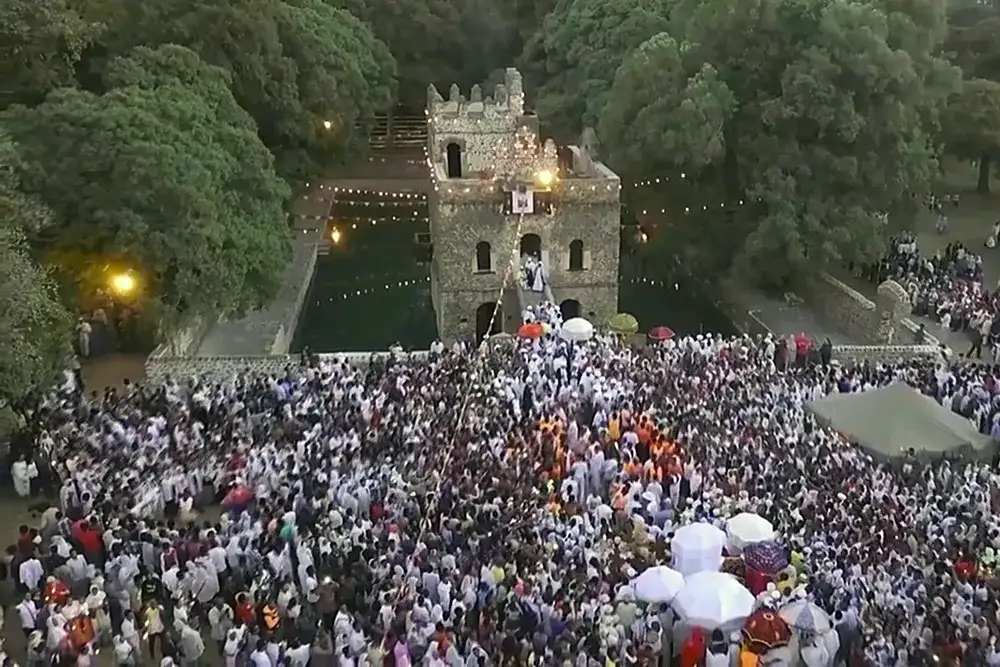
Among his most celebrated works is Fasilides' Bath, a unique seventeenth-century royal bathing and ceremonial complex located just outside the Royal Enclosure. Today, it is renowned as the venue for the annual Ethiopian Orthodox Timkat (Epiphany) celebrations and remains one of Gondar's most iconic historical landmarks. Read more about Fasilides' Bath here.
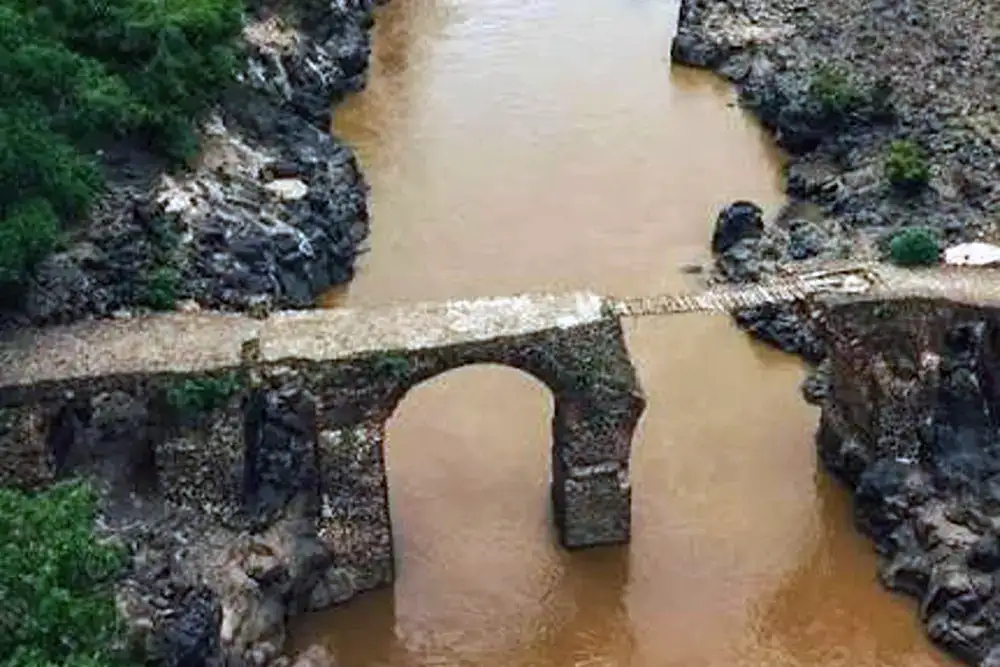
His engineering achievements also include two historic stone bridges spanning the Abay (Blue Nile) River near Lake Tana, known collectively to this day as the Fasilides Bridges:
- • Alata Dildiy (Alata Bridge): Spanning the Abay River, this structure is located 31 km from Bahir Dar city, or a brief 20-minute walk from the town of Tis Abay. Erected between 1631–1667,It was built with such exceptional quality and meticulous care that its remarkable strength continues to bear witness to its ancient craftsmanship up to the present day.
- • Sabera Dildiy (The Broken Bridge): Also constructed over the Abay River under the Emperor's orders, this bridge is situated a 6-hour walk east of Mota town. Its name carries immense historical weight; during the five years of the Patriots' Resistance era (1935–1941), Ethiopian patriots intentionally blew up a section of the bridge to prevent invading enemy forces from using it as a tactical crossing point, permanently associating the structure with this heroic act of sabotage.
In tandem with his domestic construction projects, Emperor Fasilides successfully restored, at least in part, territories that ancient Ethiopians had previously administered. Under his rule, the imperial domain extended north to the Red Sea and west into Sennar and Nubia, with the latter region governed by a local ruler named King Giorgis. Furthermore, his restorative campaign extended to the empire's sacred landscape, where he rebuilt numerous holy sites—most notably the prominent Cathedral of Aksum Tsiyon (St. Mary of Zion). Known today as the “Old Cathedral,” this historic church stands directly next to the newer cathedral later built by Emperor Haile Selassie.
Fasil Ghebbi: The Royal Enclosure and Fasilides' Palace
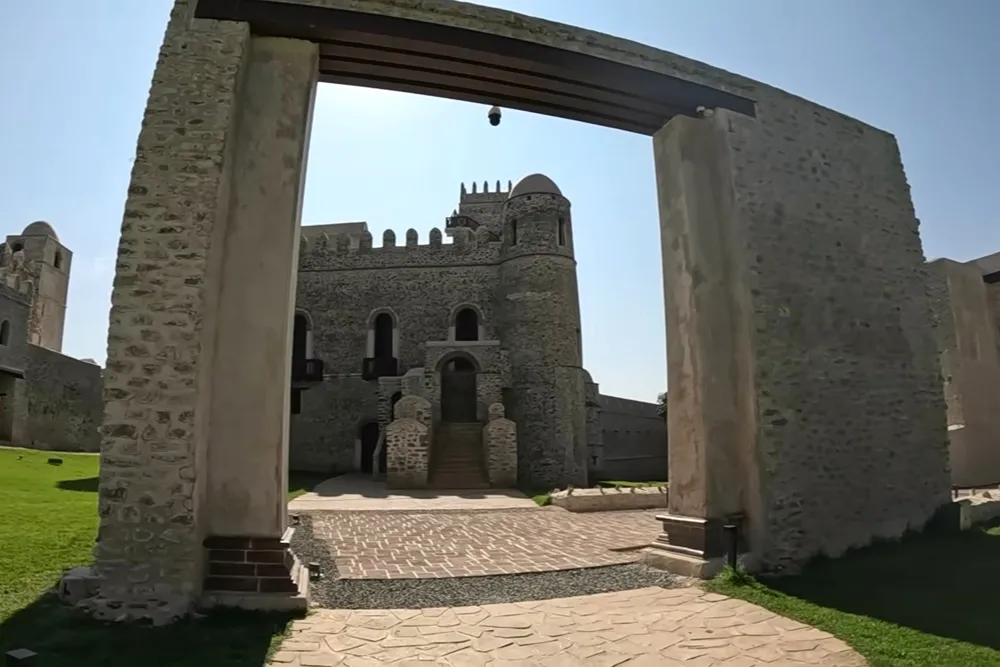
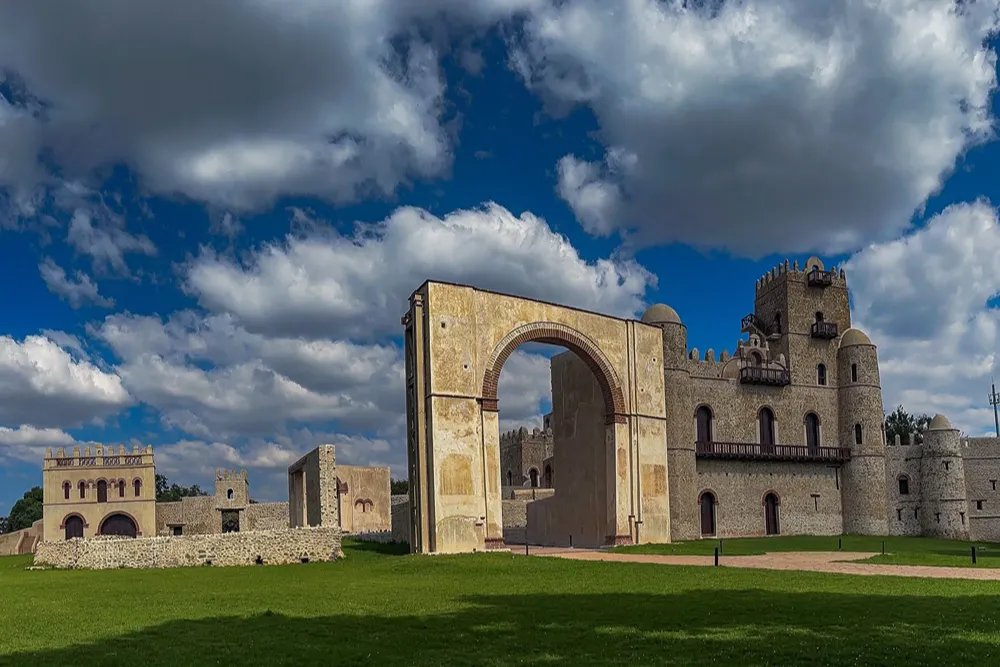
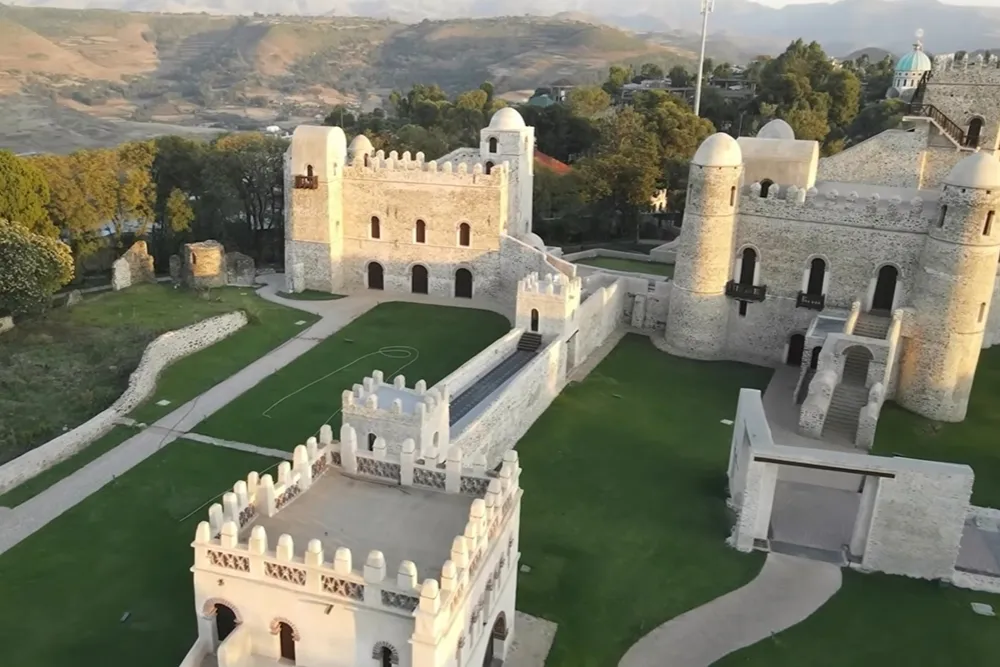
Fasil Ghebbi, the 17-acre fortified royal enclosure surrounded by imposing stone walls and twelve monumental gates, served as the residence of Emperor Fasilides and the successive rulers of the Gondarine Empire. At its heart stands the Palace of Emperor Fasilides, the oldest and largest castle within the enclosure and the architectural masterpiece that established Gondar as Ethiopia's permanent imperial capital. In 2025, Fasil Ghebbi underwent a comprehensive conservation and restoration program that preserved its historic castles, strengthened vulnerable structures, rehabilitated the courtyards, and enhanced visitor facilities, ensuring the long-term protection of this UNESCO World Heritage Site for future generations.
The palace is an imposing three-story stone fortress rising approximately 32 meters above a square foundation measuring 25 by 25 meters. According to local tradition, its architectural design was inspired by Noah's Ark, while its southern façade is said to resemble a crowned lion facing east—a powerful symbol of imperial authority.
Every section of the palace was carefully designed to serve a specific royal, administrative, religious, or ceremonial function. From the kitchens and reception halls to the towers, balconies, and private royal chambers, each level reflects the organization, engineering skill, and imperial traditions of the Gondarine court. The following sections examine the architectural features and functions of the palace floor by floor.
Ground Floor
The ground floor formed the operational heart of the royal palace, supporting the daily activities of the imperial household. Divided into several rooms of different sizes , it accommodated the service areas that supplied the needs of the Emperor, the royal family, and members of the court.
On the eastern side of the palace, a series of smaller chambers served as the royal kitchens, where meals and beverages were carefully prepared for the Emperor's daily banquets and official ceremonies. These rooms were equipped with built-in stone shelves for storing cooking utensils, serving vessels, and other kitchen equipment, the remains of which are still visible today.
Prepared meals were carried from the kitchens to the royal apartments above by means of a dedicated staircase attached to the palace. Although this staircase has since collapsed, its remains provide valuable insight into the thoughtful design and efficient organization of the imperial residence.
First Floor
The first floor of the palace was primarily devoted to royal administration, ceremonial functions, and daily court life. It contains four principal rooms, each serving a distinct purpose within the imperial household. The first of these is the Throne Room, where Emperor Fasilides received nobles, foreign envoys, religious leaders, and other distinguished visitors. It was here that official audiences were held, diplomatic discussions took place, and matters of state were conducted.
Adjacent to the reception hall are two separate dining chambers reserved for men and women, reflecting the customs and court etiquette of the Gondarine period. Also located on this floor is the royal wardrobe, where the Emperor's ceremonial robes, crowns, and other imperial regalia were carefully stored and prepared for official occasions.
Second Floor
The second floor is a largely open space that reflects the palace's religious and ceremonial character. At its side stands the Kebero Genb (Drum Tower), a drum like tower traditionally used to safeguard holy relics, sacred treasures, and other objects of religious significance associated with the imperial court.
Rising from each of the palace's four corners are the distinctive Enqulal Genb ("Egg Towers"), named after their characteristic oval-shaped domes. These three-story towers served as private chapels where the Emperor and members of the royal family could withdraw for prayer, meditation, and spiritual reflection. Their prominent position at the corners of the palace symbolizes the central role of the Ethiopian Orthodox faith in the daily life of the Gondarine court.
Houses of Prayer (Royal Chapels)
An integral feature of every Ethiopian imperial palace was the House of Prayer (Royal Chapel), where the Emperor and members of the royal family conducted their daily prayers and private religious observances. More than a place of worship, the chapel symbolized the inseparable relationship between the Ethiopian monarchy and the Ethiopian Orthodox Tewahedo Church.
The importance of these chapels extended beyond the palace walls. Whenever the Emperor traveled or led military campaigns, a dedicated tent was erected to serve as a temporary chapel, ensuring that daily prayers and other religious observances continued uninterrupted. This practice reflected the belief that the Emperor governed and fought under divine guidance and protection.
The royal chapels housed sacred objects used in daily worship, including Holy Scriptures, processional crosses, liturgical manuscripts, and revered religious icons. Among the most prominent :An icon of the Holy Virgin Mary holding the Christ Child, surrounded by holy angels ,An icon depicting the Passion and Crucifixion of Christ and Other sacred icons of Christ, the saints, and archangels, all preserved with great reverence for prayer and devotion.
These chapels served not only as places of personal devotion but also as spiritual centers where the Emperor sought divine guidance before making important decisions affecting the empire.
Third Floor
The third floor served as the Emperor's private bedchamber, providing the highest level of privacy and security within the palace. It is reached by a winding external spiral staircase, a design that helped regulate access to the royal apartments while enhancing the fortress-like character of the castle.
From this elevated chamber, the Emperor enjoyed a commanding panoramic view of Gondar and its surrounding landscape. The room offered not only a peaceful retreat from the formal activities of the court but also a strategic vantage point from which the monarch could observe the capital and its environs.
Notable Features of Fasildes Palace
The Decree-Proclamation Balcony
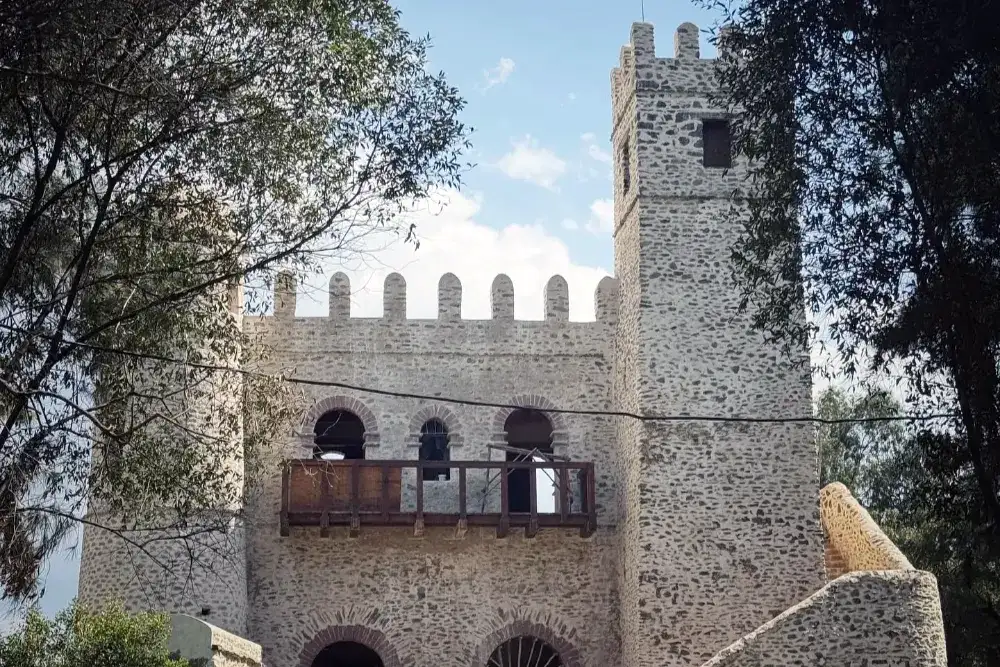
Projecting from the southern side of the first floor is a wooden balcony that served as the principal platform for public announcements. From this balcony, the Afe Negus ("Mouth of the King"), the Emperor's official herald and spokesman, proclaimed imperial decrees, royal appointments, legal judgments, and other official commands to the assembled public. It was also from here that the Kitet (general mobilization order) was announced, summoning nobles, soldiers, and provincial leaders to military service or other urgent affairs of state. In an age before written gazettes or modern communication, this balcony functioned as the empire's official voice, ensuring that the Emperor's commands reached his subjects with authority and ceremony
The Emperor's Balcony
Located on the second floor, this throne-shaped balcony served as the Emperor's ceremonial observation point. From here, the monarch would appear before members of the royal court and the public to oversee important ceremonies, receive distinguished guests, review activities within the Royal Enclosure, and personally issue or confirm imperial decrees. Elevated above the palace courtyard, the balcony symbolized the Emperor's supreme authority and his visible presence at the heart of the Gondarine Empire.
The Watch-Tower / Upper Terrace
The uppermost level of the palace is an open terrace that served as both a watchtower and an observation platform. Crown-shaped in appearance, this elevated terrace provided the Emperor with an uninterrupted panoramic view of Gondar and the surrounding countryside. From this commanding vantage point, he could monitor the city, observe military movements, welcome arriving delegations, and oversee activities within and beyond the royal enclosure.The view extended eastward toward Belesa, northward to Wagara and Armachiho, and southward across the plains of Dembiya to the shores of Lake Tana. More than an architectural feature, the terrace symbolized the Emperor's vigilance over his capital and his responsibility for safeguarding the empire.
Emperor Fasilides' Archive / Library (The Paper Castle)
Among Emperor Fasilides' most remarkable contributions was the establishment of a royal archive and library, popularly known as the Paper Castle. Located about 80 meters west of the main palace, the two-story structure served as a center for preserving Ethiopia's literary, historical, and religious heritage during the Gondarine period.
Recognizing the importance of books in safeguarding the nation's history and civilization, Emperor Fasilides brought together skilled scribes, scholars, and church scholars to copy, restore, and preserve valuable manuscripts that had been lost or damaged through war, neglect, and the passage of time. Supported by the Emperor with provisions, privileges, and tax exemptions, these scholars produced copies of historical chronicles, religious texts, and other important works, which were then distributed to churches and monasteries throughout the empire. The library also served as a reading and study center for members of the royal court.
The building itself was a substantial rectangular, two-story stone structure measuring approximately 16 by 7 meters. It featured both internal and external staircases, an Enqulal Genb (Egg Tower), and extensive ebony woodwork supporting its floors, doors, windows, and manuscript shelves. Although much of its wooden interior was lost during successive wars, the stone structure survived.
In 2025, the Paper Castle underwent a comprehensive conservation and restoration program that stabilized the historic structure and reconstructed its distinctive Enqulal Genb, ensuring the preservation of one of Emperor Fasilides' most important cultural and intellectual legacies for future generations.
Gondar's Sacred Sites: The Seven Churches of Emperor Fasilides
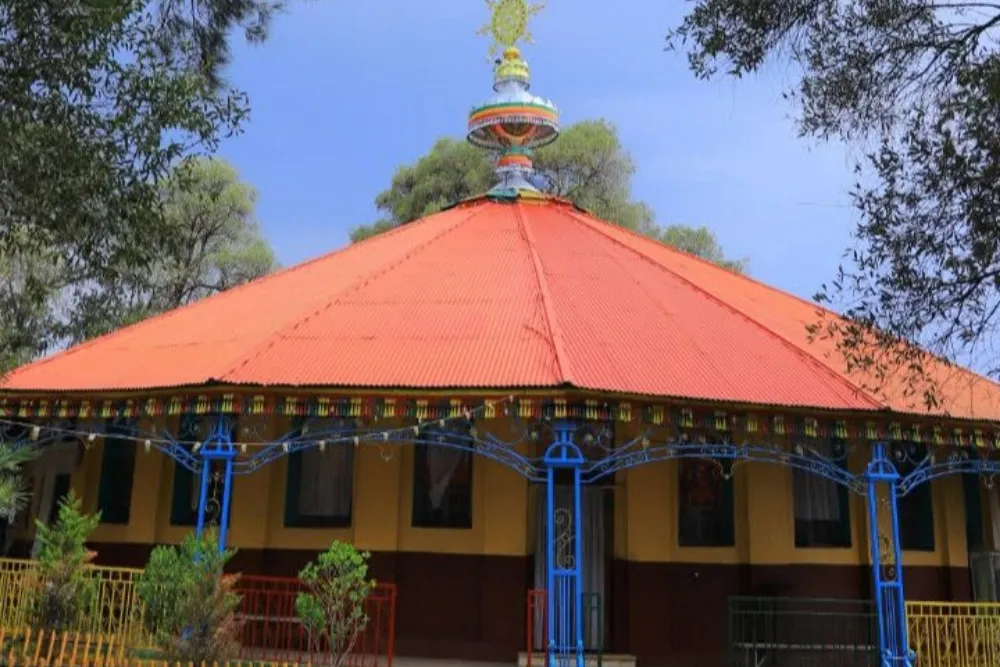
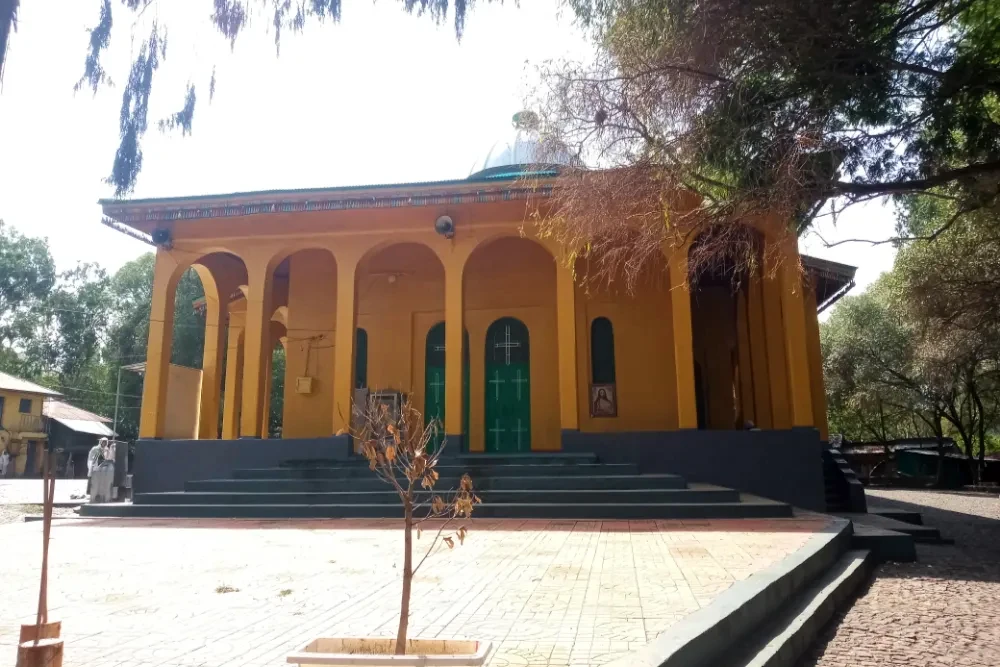
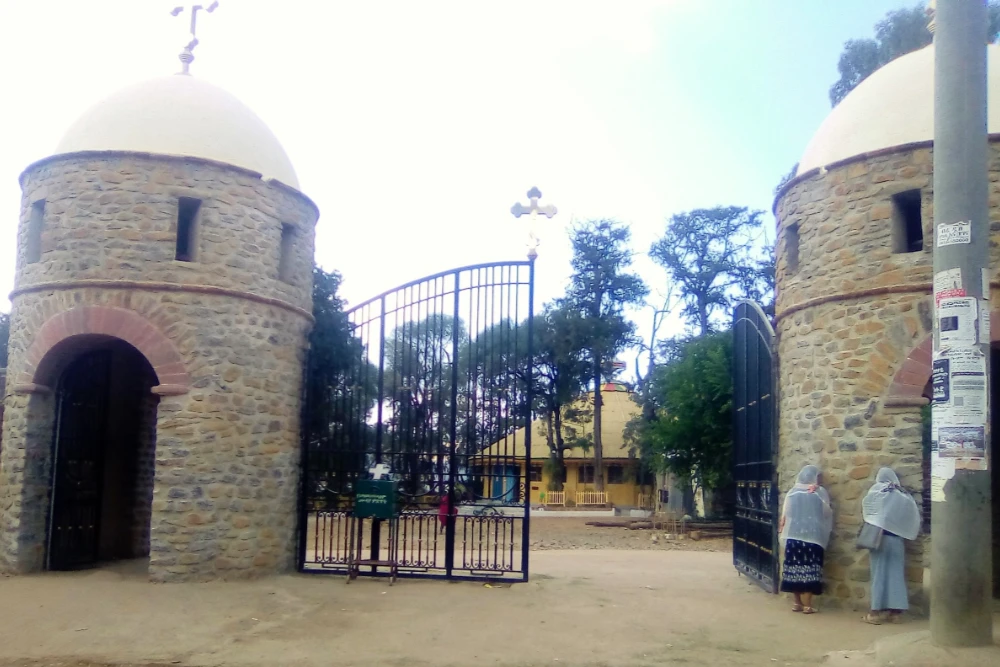
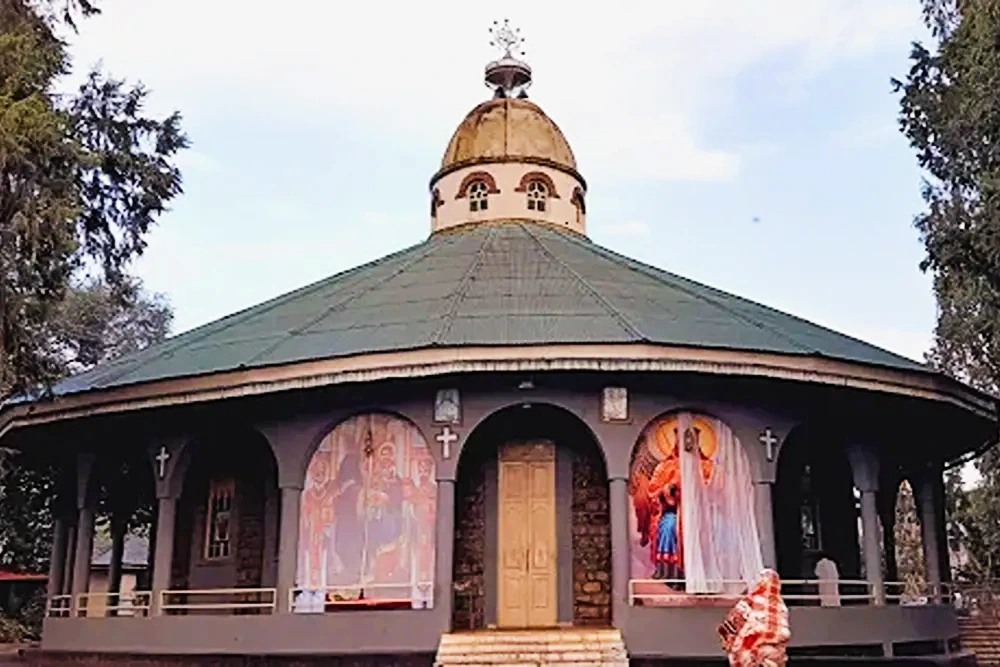
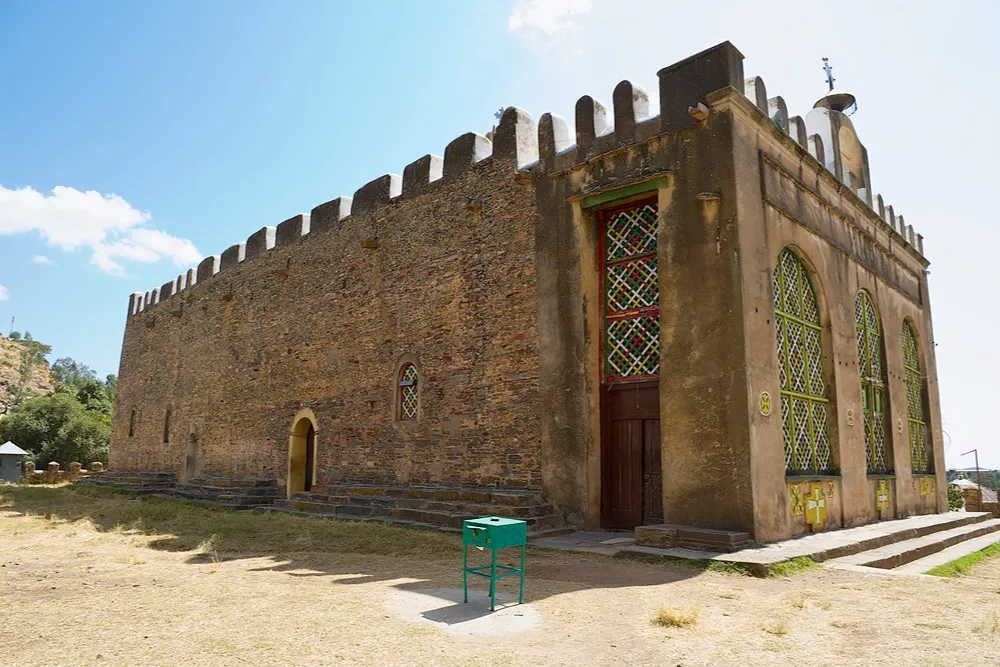
Alongside the construction of his royal palace, Emperor Fasilides established seven churches in and around Gondar, making the spiritual foundation of the new capital as important as its political and military strength. According to local histories and long-standing church traditions, each sanctuary was built in response to a particular need or crisis facing the young imperial city. These traditions portray Fasilides as a deeply devout ruler who sought divine guidance before making important decisions, acting upon the counsel of a revered hermit whose advice shaped the religious landscape of Gondar. Two of these churches stand within the Royal Enclosure, while the remaining five are distributed across different parts of the city.
Among the churches inside Fasil Ghebbi is Elfign Giyorgis , the Emperor's chapel and principal place of worship. According to royal tradition, its Tabot (the consecrated replica of the Ark of the Covenant found in every Ethiopian Orthodox church) accompanied the imperial army on military campaigns. The presence of the Tabot was believed to invoke divine protection, strengthen the morale of the soldiers, and symbolize that the Emperor fought under God's blessing rather than by military power alone.
The second palace church, Gimjabet Maryam, was built in honor of Empress Ehete Kristos. Church tradition relates that during the construction of the royal palace, repeated lightning strikes caused portions of the structure to collapse. Seeking spiritual counsel, Emperor Fasilides consulted a holy hermit, who instructed him to build two churches—Gimjabet Maryam and Adebabay Eyesus —on either side of the palace. The Emperor accepted the advice and immediately ordered their construction, after which the destructive lightning was believed to have ceased. To further protect the capital, he also constructed Kidus Gabriel church , dedicated to the Archangel Gabriel, as another spiritual safeguard over the city.
The challenges facing the new capital extended beyond natural disasters. When a deadly epidemic threatened both the population and the imperial army, the same hermit once again appeared before the Emperor, reassuring him with the words, "Fear not, Michael is with you." Following this counsel, Fasilides ordered the construction of Fit Michael church , while Medhane Alem church was also established as a place of prayer for deliverance from the plague. According to local tradition, the epidemic gradually subsided thereafter.
On another occasion, wild lions and leopards began attacking residents around the growing city. Once more, the hermit advised the Emperor to dedicate a church to Abune Gebre Menfes Qidus, the revered Ethiopian saint traditionally associated with wild animals. Fasilides accepted the instruction and built the church known as Fit Abo , after which the attacks were believed to have ended.
Whether viewed through the lens of faith or history, these seven churches illustrate the central role that religion played in the founding of Gondar. They reflect a period in which spiritual guidance, royal authority, and public welfare were inseparably connected, with Emperor Fasilides responding to every major challenge by combining decisive leadership with unwavering devotion.
The Water Reservoir & Fish Breeding Structure
Behind the palace, a staircase leads to Emperor Fasilides' water reservoir and fish breeding structure, an impressive example of the advanced engineering that characterized the Gondarine court. Measuring approximately 15 meters in depth and 30 cubits in length, the reservoir served both practical and economic purposes, providing a reliable water supply while also supporting fish breeding for the royal household.
One of its most remarkable features was its sophisticated water management system. During the rainy season, rainwater collected on the palace roof was directed through two carefully constructed stone gutters into an underground drainage network that filled the reservoir. Built entirely from stone and lime mortar, the palace roof was engineered with such precision that it remained watertight, preventing rainwater from seeping into the rooms below while efficiently channeling it into the reservoir.
During the dry season, workers manually replenished the reservoir by carrying water from a nearby river along a purpose-built staircase. The same staircase provided access for routine cleaning and maintenance, helping to prevent stagnant water and ensuring the reservoir remained functional throughout the year. Historical records indicate that, in addition to storing water, the reservoir was also used for fish breeding, reflecting the careful planning and self-sufficiency of the imperial palace complex.
Originally protected by a roof, the structure has since lost its covering. Nevertheless, the reservoir remains a remarkable testament to the architectural ingenuity, hydraulic engineering, and practical foresight of Emperor Fasilides' builders, whose work continued to serve the palace for centuries.
Gondar's Castles as a Modern Military Headquarters
Although Addis Ababa was liberated in 1941, the Italian occupation of Ethiopia did not conclude there. Its final chapter unfolded in Gondar, where the fortified castles of Fasil Ghebbi served as General Guglielmo Nasi's headquarters during the last organized resistance of Italian East Africa. According to historian Angelo Del Boca in The Fall of the Empire, Nasi established his command post within the seventeenth-century Royal Enclosure, transforming the former imperial residence into the center of Italian military operations.
The contrast was remarkable. Built by Emperor Fasilides as the seat of the Ethiopian Empire, the centuries-old stone castles were adapted into a modern military headquarters equipped with radio communications, operational maps, and planning rooms. From within these historic walls, General Nasi coordinated the final defense against the advancing Ethiopian Patriot forces and their British allies, making Fasil Ghebbi the scene of one of the last major engagements of the East African Campaign.
The use of Fasil Ghebbi as a twentieth-century military headquarters demonstrates the remarkable durability and strategic value of its architecture. Designed as a fortified royal residence nearly three centuries earlier, the Royal Enclosure once again fulfilled a military purpose, adding a unique and significant chapter to the long and enduring history of Gondar's imperial castles.
Why Visit Fasil Ghebbi and Gondar?
Gondar offers one of Africa's richest historical experiences. Explore the magnificent castles of Fasil Ghebbi, the beautiful Debre Berhan Selassie Church, Fasiladas' Bath, Qusquam Complex, and vibrant local culture. Every monument tells the story of Ethiopia's imperial past and enduring heritage.
Book your Gondar and Ethiopia adventure with Worqamba Ethiopia Tours and experience the country's history, culture, wildlife, and breathtaking landscapes with knowledgeable local guides. Let us make your journey unforgettable.
Related Tours
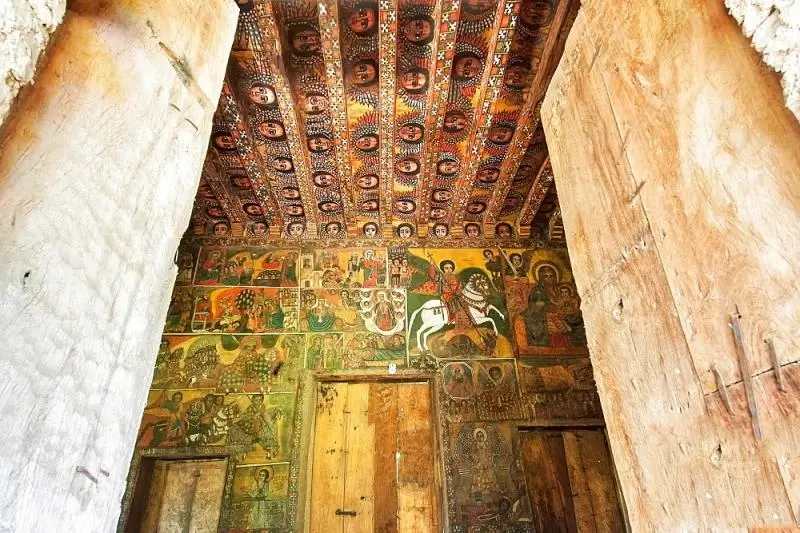
1 Day Gondar City Tour – Discover Ethiopia’s Imperial Camelot
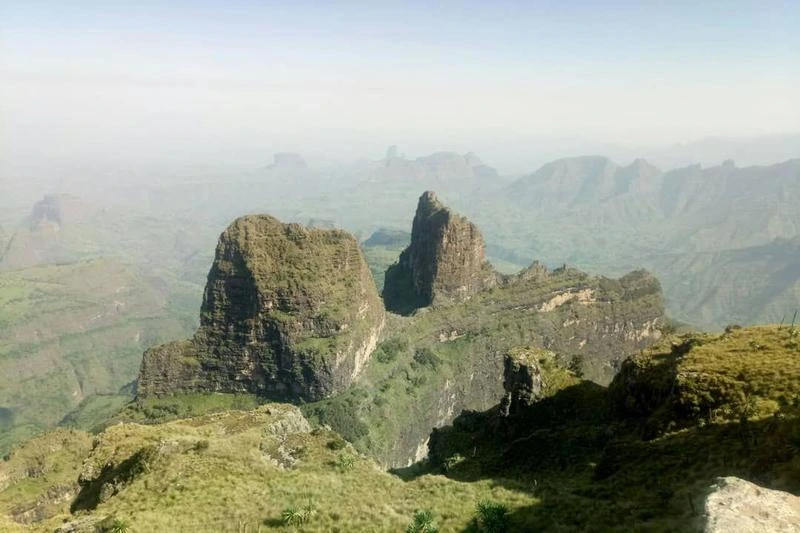
Trek to simien Mountain one day tour

Northern Ethiopia 12 Days Tour